
THE NUSA DUA, suararealitas.co – InJourney Tourism Development Corporation (ITDC) continues to strengthen sustainable tourism management at The Nusa Dua, Bali, through a range of integrated environmental initiatives.
These efforts encompass circular economy-based waste management, water and energy efficiency, biodiversity conservation, and community empowerment.
This commitment is further reflected in The Nusa Dua’s achievement of Sustainable Tourism Destination certification based on the Global Sustainable Tourism Council (GSTC) standards in 2026.
This achievement forms part of ITDC’s ongoing efforts to maintain a balance between tourism-driven economic growth, increasing tourist arrivals, and the environmental carrying capacity of the destination.
These initiatives are implemented through an integrated management approach involving ITDC and its subsidiary, PT ITDC Nusantara Utilitas (ITDC NU), particularly in the provision and management of more efficient and environmentally friendly utility infrastructure.
General Manager of The Nusa Dua, I Made Agus Dwiatmika, stated that environmental sustainability is a fundamental part of destination management strategy and must be translated into concrete and consistent actions.
“For ITDC, maintaining a balance between tourism activities and environmental preservation is an inherent responsibility in managing the destination. The achievement of Sustainable Tourism Destination certification based on GSTC standards in 2026 represents an important recognition of these ongoing efforts. The Nusa Dua is also recognized as the first destination in Indonesia to receive GSTC certification at the destination level. This achievement further motivates us to continuously improve our destination management standards in a sustainable manner,” he said.
Circular Economy-Based Waste Management
One of ITDC’s key initiatives is the implementation of an Integrated Waste Management System at The Nusa Dua.
This system emphasizes waste segregation by type, the conversion of organic waste into compost, and the management of inorganic waste through sorting, recycling, and reuse in collaboration with third-party partners.
Based on the destination’s 2026 management data, waste generation at The Nusa Dua reaches approximately 6.3 tonnes per day. Of this total, approximately 98.77% consists of organic waste, which is processed into compost.
Overall, approximately 95% of the total waste generated across The Nusa Dua is successfully managed through an integrated and sustainable waste management system.
The processed organic waste is then reused to support the maintenance of the destination’s landscaping and green open spaces.
This approach not only helps reduce the volume of waste sent to final disposal facilities but also promotes circular economy principles by transforming waste into a valuable resource.
Strengthening Water Resilience through an Integrated Utility System
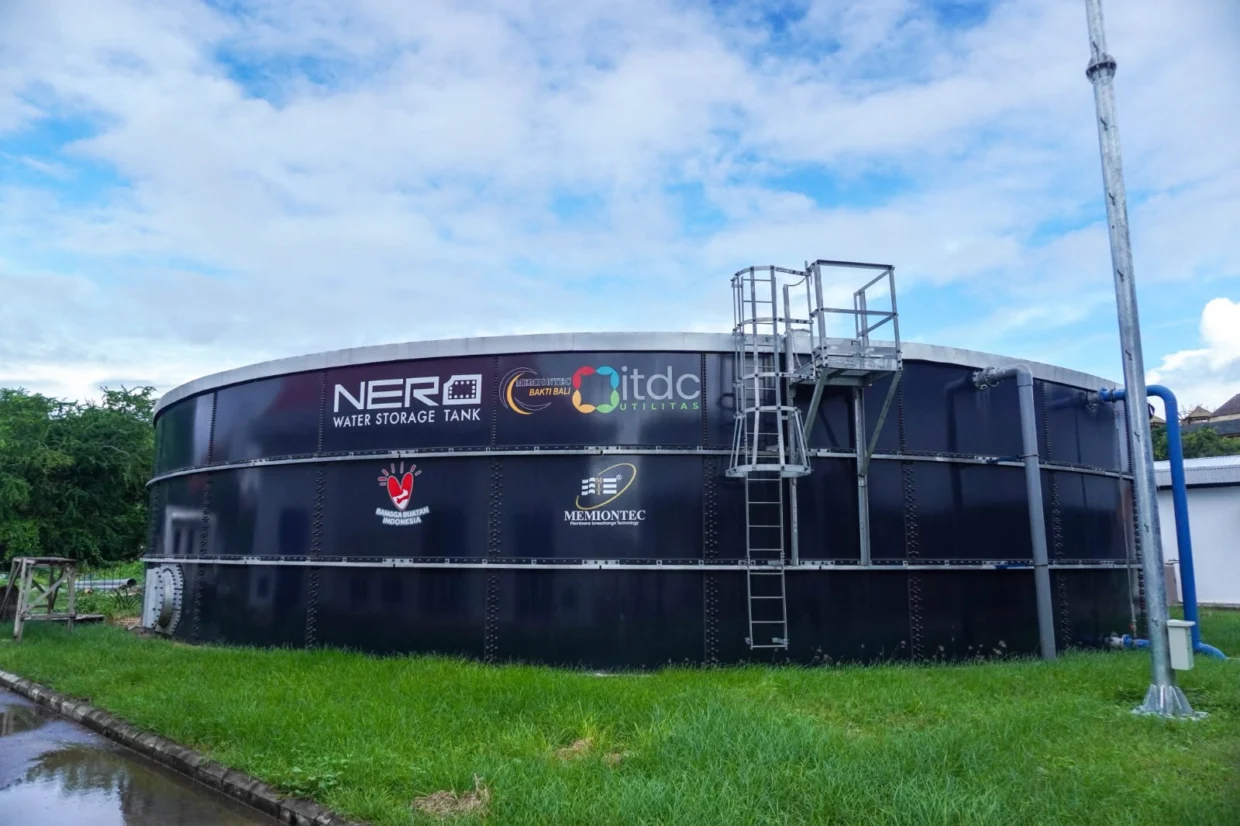
In managing water resources, ITDC, together with ITDC NU, has developed an integrated utility system encompassing clean water production using Seawater Reverse Osmosis (SWRO) technology, wastewater treatment, and the reuse of treated water, also known as reclaimed water.
One of the key infrastructures within this system is the wastewater treatment facility at Lagoon The Nusa Dua, which has been operational since 1979. Utilizing Waste Stabilization Ponds technology, the facility has a treatment capacity of approximately 10,000 cubic meters of wastewater per day.
Wastewater generated from the area’s operational activities, including hotel operations and commercial facilities, undergoes a series of treatment processes in accordance with applicable standards before being reused.
Currently, more than 90% of the treated wastewater is reused to support irrigation needs for the area’s gardens and landscaped green spaces.
In addition, the treated water is also utilized as feedwater for clean water production through the Brackish Water Reverse Osmosis (BWRO) process.
Furthermore, the implementation of a circular water management system contributes to reducing freshwater consumption by up to 40%.
All irrigation requirements across the destination are met through the reuse of recycled water from wastewater treatment.
These efforts not only optimize water resource utilization but also reduce dependence on conventional freshwater sources, reinforcing ITDC’s commitment to sustainable tourism destination management.
Through ITDC NU, utility infrastructure development also includes the provision and distribution of Liquefied Natural Gas (LNG) to meet tenants’ operational energy requirements through a more integrated supply system.
This infrastructure development forms part of ITDC’s efforts to enhance operational reliability, improve energy efficiency, and reduce the carbon footprint of operations at The Nusa Dua by up to 20%.
Preserving Biodiversity and Strengthening Ecosystem Resilience
ITDC’s commitment to environmental preservation is also reflected in its management of green open spaces and biodiversity conservation.
At The Nusa Dua, ITDC manages approximately 97 hectares of green open space, equivalent to around 27% of the total destination area, with more than 5,700 trees comprising 138 vegetation species, including 32 local and endemic tree species.
These green open spaces not only enhance the destination’s landscape character but also play an important role in maintaining air quality, regulating the microclimate, absorbing carbon, and providing habitats for biodiversity.
Within the coastal ecosystem, ITDC further strengthens conservation efforts through collaborative mangrove planting initiatives in the Pudut area, in partnership with the UPTD Ngurah Rai Grand Forest Park.
This initiative forms part of broader efforts to preserve coastal ecosystems, protect natural habitats, and enhance the destination’s resilience to the impacts of climate change.
Marine ecosystem conservation is also supported by the presence of the Nusa Dua Reef Foundation, which focuses on research, education, and coral reef conservation.
Coral reef rehabilitation programs in the waters of Nusa Dua and Tanjung Benoa represent collaborative efforts to safeguard the sustainability of underwater ecosystems.
Engaging Communities as Part of the Environmental Solution
ITDC recognizes community involvement as a key factor in achieving sustainable destination environmental management. Accordingly, various educational and empowerment initiatives continue to be developed to raise awareness and encourage active community participation in environmental management practices.
One such initiative was the Green Movement: Eco Enzyme Action program, held on May 29, 2026, at The Nusa Dua. The activity featured training on converting organic waste into eco enzyme and involved 30 participants, comprising 18 members of the Paguyuban The Nusa Dua Beach Traders Association and 12 community representatives from Benoa Village through the Community Empowerment Institution (LPM).
Through this initiative, ITDC encourages the adoption of simple and sustainable waste management practices within the community.
This participatory educational approach is expected to foster new habits in reducing organic waste while extending the benefits of environmental initiatives to communities surrounding the destination.
In addition, engagement with tenants, local businesses, and various stakeholders continues to be strengthened through collaborative destination management, capacity building, and the development of an inclusive business ecosystem.
Through these initiatives, ITDC continues to strengthen the implementation of The Nusa Dua Sustainability Strategy 2026–2030 as a strategic framework for managing and developing the destination into a greener, more inclusive, resilient, and responsible tourism area.
“Looking ahead, ITDC will continue to foster collaboration and innovation in environmental management by placing resource efficiency, circular economy practices, biodiversity protection, and community empowerment at the core of destination operations. With a proven track record spanning 52 years, The Nusa Dua has grown into a well-established destination grounded in the principles of Tri Hita Karana, which are integrated into its master plan. We firmly believe that quality tourism should not be measured solely by growth and destination appeal, but also by its ability to preserve the environment and deliver lasting benefits for future generations,” concluded Agus Dwiatmika.